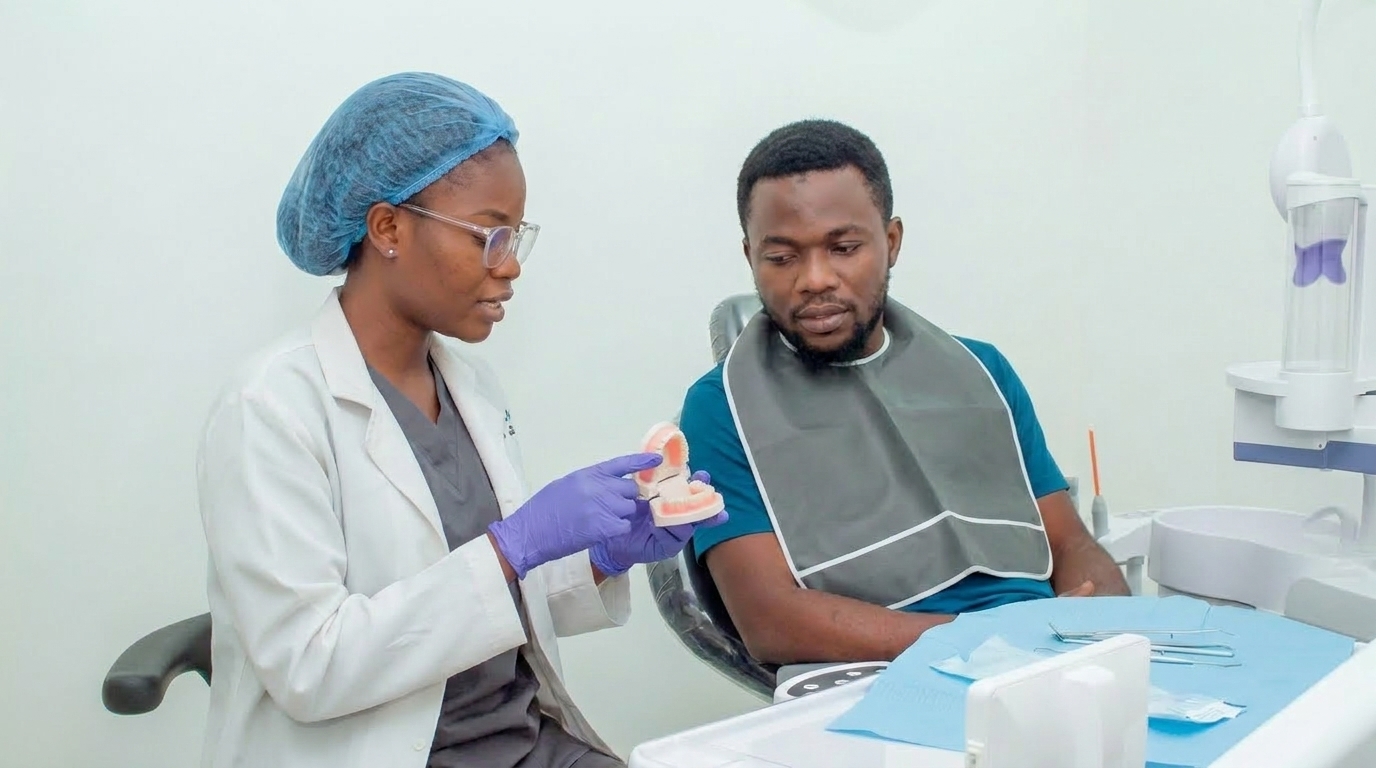
Most bad breath starts in the mouth, usually from bacteria living in plaque, between the teeth, along the gums and on the back of the tongue. Effective bad breath treatment means finding that source and removing it, which is why a professional cleaning and check-up often makes such a noticeable difference. Good home care then keeps it under control.
Bad breath (also called halitosis) is common and nothing to be embarrassed about. At Pearl Roots Dental Clinic in Ngong, we see it as a useful signal from your mouth, not a reason for judgement.
What causes bad breath?
Bacteria in the mouth break down food particles and proteins, releasing sulphur compounds that smell unpleasant. Anything that gives those bacteria more places to hide, or more to feed on, tends to make breath worse.
Plaque and trapped food
Plaque is the soft, sticky film that forms on teeth every day. If it is not brushed and cleaned away, especially between the teeth, it becomes a home for odour-causing bacteria. Food caught between teeth, around old fillings or under a poorly fitting bridge or denture has the same effect.
Gum disease
When plaque hardens into tartar along the gumline, the gums can become inflamed. Signs include red or swollen gums, bleeding when you brush and a persistent bad taste. As gum disease progresses, pockets can form between the gums and teeth where bacteria collect. A stubborn bad smell is often one of the first things people notice.
A coated tongue
The surface of the tongue is rough and full of tiny grooves. Bacteria, dead cells and food debris build up there, particularly towards the back. A white or yellowish coating is a common source of morning breath and ongoing odour.
Dry mouth
Saliva naturally washes the mouth and keeps bacteria in check. When the mouth is dry, odour builds quickly. Dry mouth can be caused by:
- Not drinking enough water, especially in hot weather or after exercise
- Breathing through the mouth, including while sleeping
- Some medicines
- Long gaps between meals
Certain foods and drinks
Onions, garlic and strongly spiced food can affect breath for hours, because the compounds are absorbed and released through the lungs. Coffee and alcohol can also dry out the mouth. Sugary snacks and drinks feed plaque bacteria.
Smoking and tobacco
Tobacco leaves its own odour, dries the mouth and increases the risk of gum disease. Quitting is one of the best things you can do for your breath and your overall health.
Other dental problems
Untreated cavities, broken fillings, infected teeth and dentures that are not cleaned well can all contribute.
When bad breath may have a medical cause
Sometimes bad breath does not come from the mouth. Sinus problems, throat or tonsil infections, acid reflux, diabetes and some other medical conditions can play a part. If your teeth and gums are healthy and your breath still does not improve, we may suggest you see a doctor for a medical check-up.
Seek urgent hospital care if bad breath comes with swelling that spreads to your face or neck, difficulty breathing or swallowing, or a high fever.
How a professional cleaning helps
Brushing at home is essential, but it cannot remove hardened tartar or reach every hidden spot. A routine professional cleaning goes further:
- Examination: we check your teeth, gums, tongue and any fillings, crowns or dentures for places where bacteria collect.
- Removing tartar: we clean away hardened build-up above and just below the gumline that a toothbrush cannot shift.
- Polishing: smoothing the tooth surfaces makes it harder for new plaque to stick.
- Finding the source: if a cavity, a leaking filling or gum problem is contributing, we explain what we found and your options.
- Personal advice: we show you the areas you may be missing and suggest the right tools for your mouth.
Routine screenings also help us spot gum disease and decay early, when treatment is usually simpler and more affordable. If a problem tooth or a broken filling turns out to be the cause, our restorative care options, such as tooth-coloured fillings, can help.
Bleeding gums are not normal, even if they do not hurt. Combined with bad breath, they are a common sign that your gums need professional attention.
Home care that makes a real difference
| Habit | Why it helps |
|---|---|
| Brush twice daily for two minutes | Removes plaque before it builds up |
| Clean between teeth every day | Clears trapped food and bacteria that brushing misses |
| Clean your tongue gently | Removes the coating at the back of the tongue |
| Drink water through the day | Keeps saliva flowing and the mouth fresh |
| Cut down on sugary snacks and drinks | Starves plaque bacteria |
| Clean dentures and appliances daily | Stops odour building up on them |
| Avoid tobacco | Reduces odour, dry mouth and gum disease risk |
Mints and chewing gum mask odour for a short time but do not treat the cause. Sugar-free gum can help by encouraging saliva, but it is not a replacement for cleaning.
How often should you have a cleaning?
Many people do well with a check-up and cleaning at regular intervals, but people with gum problems may need to come more often. We will recommend a schedule that suits you. Our guide on how often to see the dentist explains more, and our preventive dentistry page covers cleanings and screenings in detail.
Our clinic in Ngong is open Monday to Friday, 8am to 6pm, and is easy to reach from Karen, Kiserian, Ongata Rongai and Matasia.
Frequently asked questions
Can a dental cleaning cure bad breath?
If your bad breath comes from plaque, tartar or early gum problems, a professional cleaning combined with good home care often makes a clear improvement. If another cause is involved, such as a cavity or a medical condition, that will need attention too.
Why do I have bad breath even though I brush?
Brushing alone misses the spaces between teeth and often the tongue. Tartar, gum disease, dry mouth and certain foods can also play a part. A check-up helps find what is behind it.
Is mouthwash enough?
Mouthwash can freshen breath for a while, but it does not remove plaque or tartar. Use it as an extra, not a replacement for brushing, cleaning between teeth and regular dental visits.
When should I see a doctor about bad breath?
If your teeth and gums are healthy and the problem continues, see a doctor to rule out sinus, throat, stomach or other medical causes.