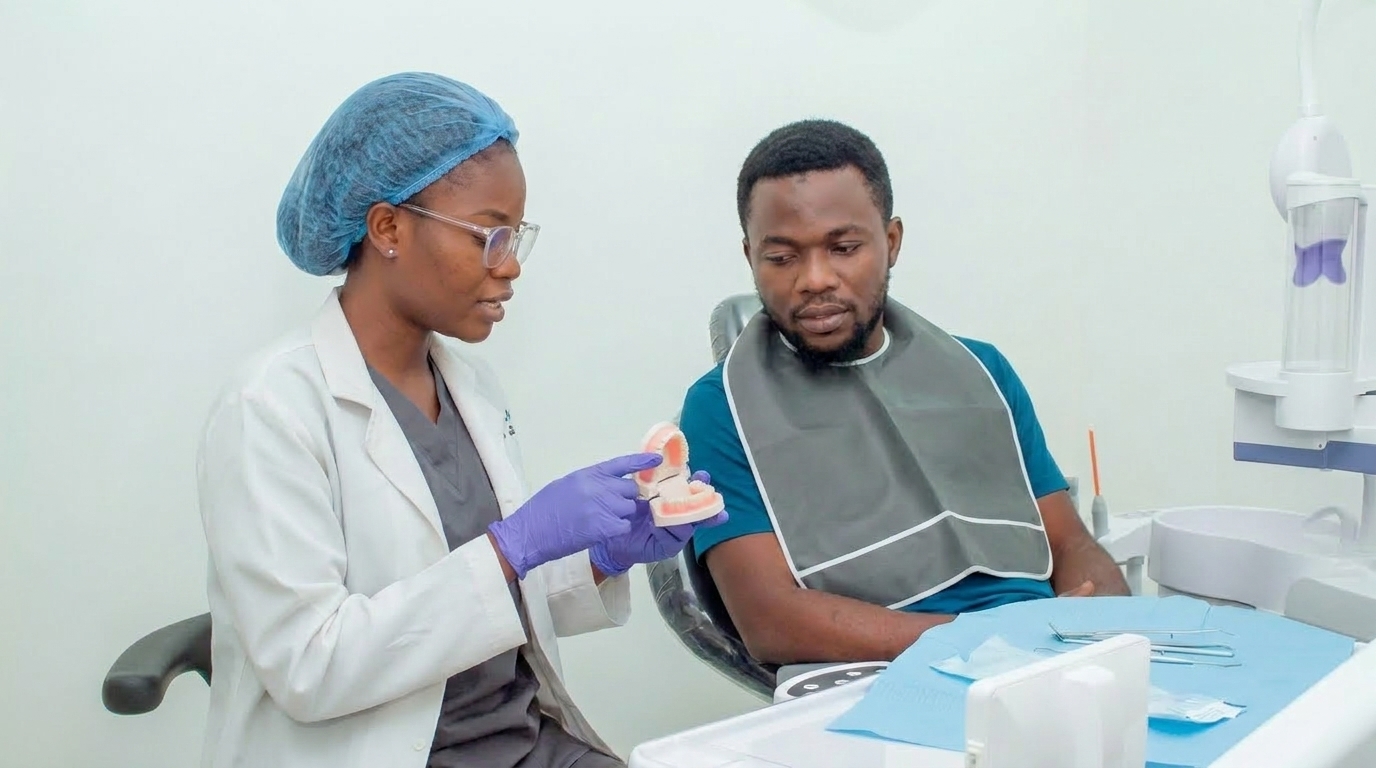
Most people are advised to have a dental check-up about every six months, but the right interval for you depends on your own risk. Someone with healthy teeth and gums may be fine with less frequent visits, while someone prone to decay or gum disease may need to come more often. Your dentist sets the interval after examining you, and adjusts it as your oral health changes.
Here is how that decision is made, what actually happens at a check-up and cleaning, and why regular visits are the most affordable kind of dentistry there is.
How often you need a dental check up
Six months is a common starting point because it is often enough to catch problems while they are small. It is not a fixed rule. Your dentist looks at several factors when recommending your next visit.
Reasons you may need visits more often
- A history of frequent fillings or new decay
- Gums that bleed, are swollen or are pulling away from the teeth
- Braces, bridges, dentures or implants that need monitoring
- A dry mouth, which can be caused by some medicines
- Smoking or chewing tobacco
- Diabetes or other conditions that affect healing and gum health
- Pregnancy, when gums can become more sensitive
- A sugary diet, including several cups of sweet chai a day
Reasons a longer interval may be fine
- Healthy gums with no bleeding
- No new decay for a long time
- A good home routine and a diet low in sugar
Children often benefit from regular visits as their teeth come through and their habits form. See our guide to your child's first dental visit for when to start.
What happens at a check-up
A check-up is more than a quick look. A typical visit includes:
- A chat about your health. Any changes in medicines or medical conditions, and anything you have noticed in your mouth.
- A full examination. Each tooth is checked for decay, cracks and worn or failing fillings.
- A gum check. Your dentist looks for bleeding, swelling and pockets forming between the teeth and gums, which are early signs of gum disease.
- A screening of the soft tissues. The tongue, cheeks, lips and the roof and floor of the mouth are checked for anything unusual.
- Advice and a plan. You hear what was found in plain language, what needs attention now, what can be monitored and when to come back.
What a professional cleaning involves
Even with careful brushing, plaque hardens into tartar in places that are hard to reach. Tartar cannot be brushed away at home. A routine cleaning removes it:
- Scaling removes tartar from around and just below the gum line
- Polishing smooths the tooth surfaces and removes some surface stains
- Tailored tips show you which areas your brush is missing
Many people find their mouth feels noticeably fresher afterwards. Gums that bled at the start often improve once the tartar is gone and home care is on track. If bad breath is a concern, our article on bad breath causes and treatment explains more.
Extra preventive treatments
Depending on your risk, your dentist may suggest some simple protective treatments, all offered as part of our preventive dentistry care:
| Treatment | What it does | Often recommended for |
|---|---|---|
| Fluoride therapy | Strengthens enamel and helps it resist decay | Children and adults at higher risk of decay |
| Pits and fissure sealants | Seals the deep grooves of back teeth where food collects | Children and teenagers with newly erupted molars |
| Mouth guards | Cushions the teeth from knocks or grinding | People who play contact sports or grind their teeth |
| Splinting | Supports loose teeth by joining them to their neighbours | Teeth loosened by injury or gum disease |
Why prevention is the most affordable dentistry
Tooth decay and gum disease usually start silently. By the time a tooth aches, a small problem that could have been a simple filling may need a crown or even an extraction. Each step up costs more time, more visits and more money.
Regular check-ups shift the balance:
- Small problems stay small. Early decay can be treated with a simple tooth-coloured filling.
- Gum disease is caught early. Early gum disease can often be reversed with cleaning and better home care.
- Fewer emergencies. Planned care fits around work, school terms and family life, instead of an unexpected day off in pain.
- Your teeth last longer. Keeping your natural teeth is better value than replacing them.
That is what we mean by premium care at an affordable price. Uncompromising quality at every visit, focused on keeping treatment simple and costs under control.
Do not wait for your next routine visit if you notice pain, swelling, a broken tooth, bleeding gums that do not settle or a sore in your mouth that has not healed within two weeks. Book sooner.
Looking after your teeth between visits
What you do every day matters as much as your check-ups:
- Brush twice a day for about two minutes with a fluoride toothpaste
- Spit after brushing rather than rinsing, so the fluoride stays on your teeth longer
- Clean between your teeth daily with floss or interdental brushes
- Keep sugary snacks and drinks to mealtimes rather than sipping through the day
- Replace your toothbrush when the bristles start to splay
Frequently asked questions
Is it bad to go a year without a dental check-up?
Not always, if your teeth and gums are healthy and your dentist has agreed a longer interval. If you have had decay or gum problems before, a year can be long enough for issues to progress unnoticed.
Is a check-up the same as a cleaning?
They are often done at the same visit but are different. The check-up is the examination and advice, and the cleaning removes plaque and tartar.
Does a dental cleaning hurt?
Most people find it comfortable. If your gums are inflamed or you have a lot of tartar, it can feel a little tender, and we can take things slowly. If you feel nervous, our article on dental anxiety may help.
How do I book?
Message us on WhatsApp or call +254 748 704 333. We see patients Monday to Friday, 8am to 6pm, in Ngong.