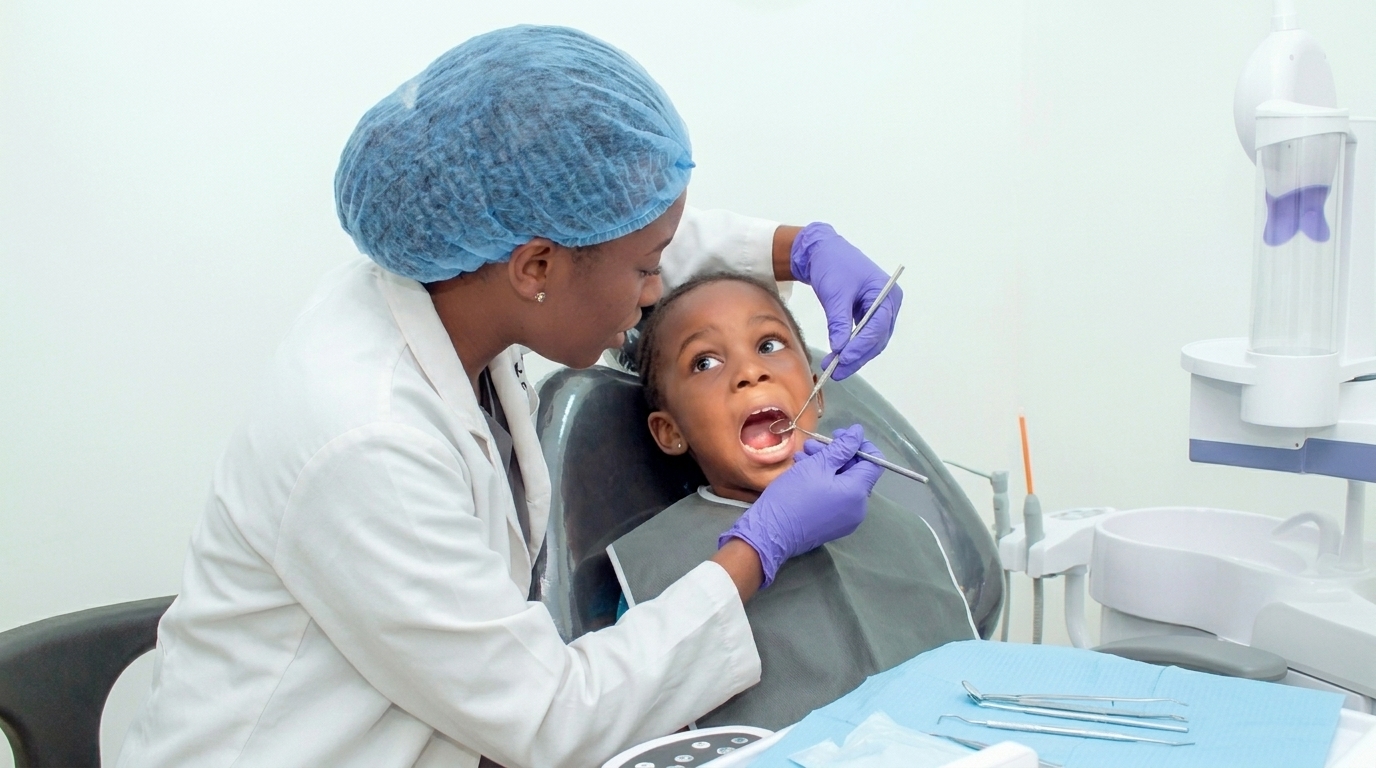
Mainstream dental guidance recommends that your child's first dental visit happens when the first tooth appears or by their first birthday, whichever comes first. That early visit is short and gentle, and it is less about treatment and more about checking healthy development, giving you practical advice and helping your child feel at ease. At Pearl Roots Dental Clinic in Ngong, our children's dentistry is designed to make that first experience a positive one.
Why go so early?
Many parents are surprised by the "first birthday" advice, since baby teeth eventually fall out. But baby teeth matter a lot:
- They help children chew properly and speak clearly.
- They hold space for the adult teeth coming through later.
- Decay in baby teeth can cause pain, infection and missed school days.
- Early visits mean any problems are spotted while they are small.
An early visit also gives your child a chance to meet the dentist when nothing is wrong. That way, the clinic becomes a familiar, friendly place rather than somewhere they only go when a tooth hurts.
How to prepare your child
A little preparation helps toddlers and older children alike feel confident.
Talk about it positively
Keep your language simple and upbeat. Say things like "the dentist will count your teeth and see how strong they are". Try to avoid words such as "hurt", "needle" or "pain", even to reassure, because they plant the idea.
Play dentist at home
Take turns being the dentist with a toothbrush and a teddy bear. Count teeth, look inside with a phone torch and practise opening wide. Picture books about visiting the dentist can help too.
Pick a good time
Choose a time when your child is usually rested and fed, not close to nap time. A morning appointment often works well for little ones. We are open Monday to Friday, 8am to 6pm, so you can plan around school terms and holidays.
Keep your own nerves in check
Children pick up on how adults feel. If you are anxious about dentists yourself, that is understandable; try to stay calm and relaxed in front of your child.
Bring a favourite toy or blanket. Something familiar in their hands can help a young child feel safe in a new place.
What happens at the first visit
For babies and toddlers, the first appointment is usually quick. A typical visit includes:
- A friendly welcome. We take a moment to say hello and let your child get used to the room.
- A chat with you. We ask about feeding, brushing, any thumb sucking or dummy use, and your family's dental history.
- A gentle look. Very young children often sit on a parent's lap, sometimes in a knee-to-knee position, while we check their teeth, gums and bite.
- Advice for home. We show you how to brush your child's teeth, how much toothpaste to use and which foods and drinks to watch.
- Plans for next time. We let you know when to come back for the next check-up.
For older children who have not been before, the visit may also include a gentle clean and, where appropriate, a discussion of preventive treatments.
Building healthy habits at home
The habits you set up in the early years have a big influence on your child's teeth for life.
Brushing by age
| Age | What to do |
|---|---|
| Before teeth appear | Wipe gums gently with a clean, damp cloth after feeds |
| First teeth to around 3 years | Brush twice a day with a smear of fluoride toothpaste, about the size of a grain of rice |
| Around 3 to 6 years | Brush twice a day with a pea-sized amount of fluoride toothpaste |
| School age | Keep supervising brushing until your child can do it thoroughly, often until around age 7 or 8 |
Encourage your child to spit out the toothpaste rather than rinse with lots of water, so the fluoride keeps working.
Food and drink
- Offer water and plain milk as the main drinks.
- Keep sugary treats, juices and sodas to mealtimes rather than sipping throughout the day.
- Avoid putting a baby to sleep with a bottle of milk or juice, which can bathe the teeth in sugar overnight.
- Choose tooth-friendly snacks such as fruit, plain yoghurt or nuts for older children.
Regular check-ups
After the first visit, regular check-ups help track how teeth are growing and catch early signs of decay. Our guide on how often to have a dental check-up explains the usual timing.
Extra protection for growing teeth
As your child's back teeth come through, the deep grooves on their chewing surfaces can trap food and bacteria. Two simple preventive treatments can help:
- Fluoride therapy strengthens enamel and makes it more resistant to decay.
- Pits and fissure sealants are thin protective coatings painted onto the grooves of back teeth.
We explain both in our guide to fissure sealants and fluoride for children. If your child plays contact sports, a mouth guard is also worth considering later on.
Gentle, affordable care for your family
We believe every family deserves premium dental care at an affordable price. When you bring your child in, we will explain what we see in plain language and talk you through any options and costs before anything is done. Learn more about our approach on the children's dentistry page. Pearl Roots is in Ngong and easy to reach from Karen, Kiserian, Ongata Rongai and Matasia.
Frequently asked questions
What if my child cries during the visit?
That is completely normal, especially for babies and toddlers. We work at your child's pace, keep things short and never force anything. Even a brief, calm visit helps build familiarity.
My child is already five and has never been. Is it too late?
Not at all. It is never too late to start. Book a visit and we will check their teeth, give you advice and help them feel comfortable.
Can I stay with my child during the appointment?
Yes. Parents are welcome to stay close throughout, and very young children often sit on a parent's lap.
When should I start using fluoride toothpaste?
Mainstream guidance is to start with a tiny smear of fluoride toothpaste as soon as the first tooth appears, increasing to a pea-sized amount from around age three.