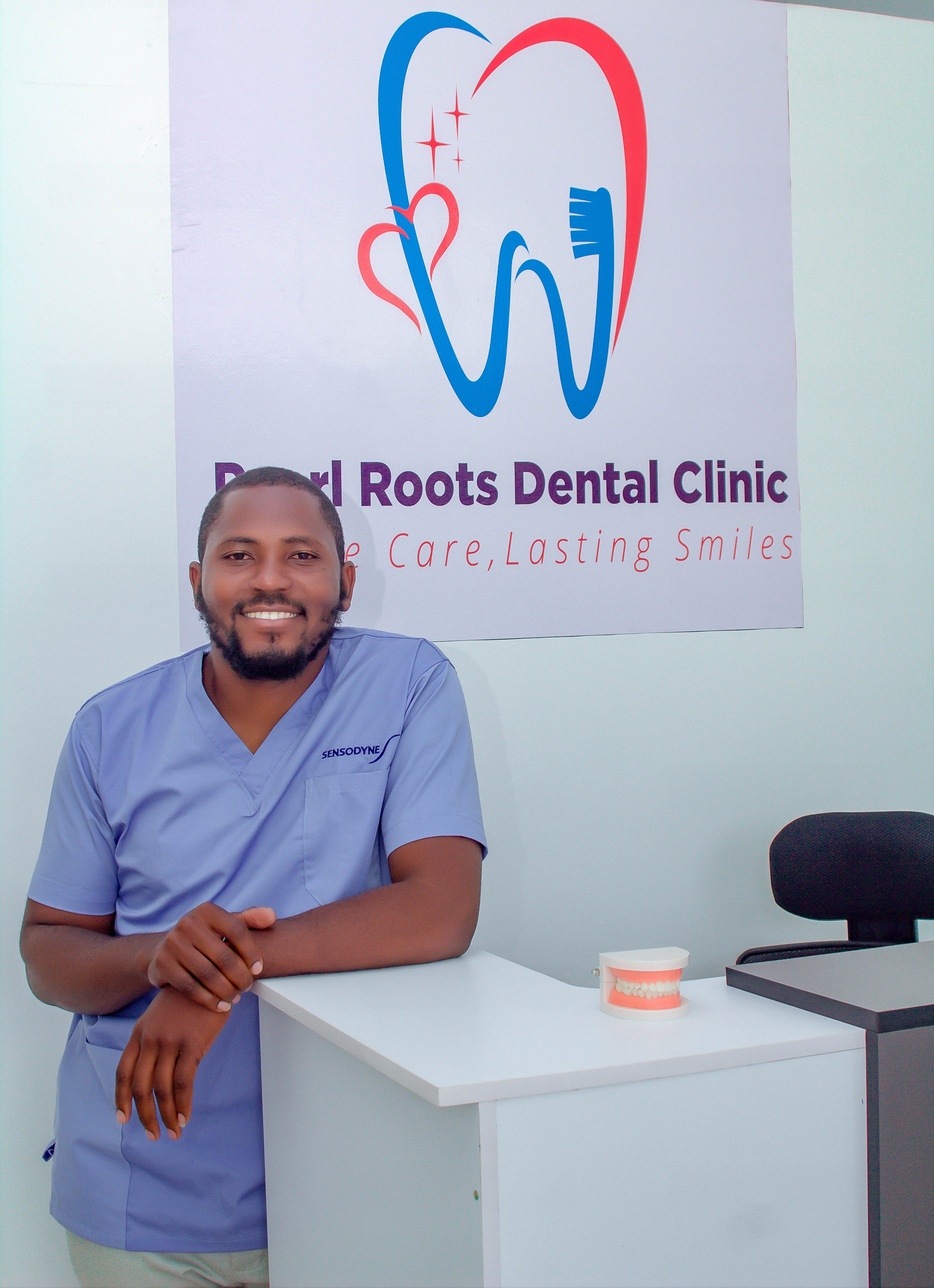
The cost of a dental implant in Kenya depends on how many teeth you are replacing, the health of your gums and jawbone, the type of tooth placed on top of the implant and how many visits your treatment needs. That is why a reliable figure can only come after an examination. At Pearl Roots Dental Clinic in Ngong, your free consultation includes a clear plan, a timeline and the cost of your treatment before anything begins.
This article explains what drives the cost of dental implants, why many people see them as good long-term value, and what the process generally involves.
What is a dental implant?
A dental implant replaces the root of a missing tooth. It is placed in the jawbone, where it is left to bond with the bone over a healing period. Once it is secure, a crown, bridge or denture is attached on top to give you a tooth that looks and works much like a natural one.
Because the implant sits in the bone, it does not rely on neighbouring teeth for support. That is one of the main reasons people choose it over other options.
What affects the cost of dental implants
When people ask about dental implants cost in Kenya, they are usually asking about the whole treatment, not just the implant itself. Several things shape the final figure.
How many teeth need replacing
Replacing a single tooth is a different plan from replacing several teeth, or a full arch. More implants mean more planning, more chair time and more components.
Your bone and gum health
An implant needs enough healthy bone to hold it firmly and healthy gums around it. If there is gum disease, it needs treating first. If the bone has thinned, which can happen after a tooth has been missing for some time, your dentist will discuss whether an implant is still the right choice or whether another option suits you better.
What goes on top
The visible part of the tooth can be a single crown, a bridge supported by implants, or a denture that clips onto implants. Each has a different cost, and the right choice depends on how many teeth are missing and your goals.
Extractions and preparation
If a damaged tooth needs removing before an implant can be placed, that adds a step. Any other treatment needed to get your mouth healthy, such as fillings elsewhere, also forms part of the overall plan.
The number of visits
Implant treatment usually happens in stages, with healing time in between. Review visits are part of the process, and a good quote should make clear what is included.
Implants vs bridges vs dentures: weighing long-term value
It is natural to compare the upfront cost of an implant with cheaper alternatives. A fairer comparison looks at how each option performs over the years.
| Dental implant | Bridge | Denture | |
|---|---|---|---|
| How it is held | Fixed in the jawbone | Attached to neighbouring teeth | Rests on the gums, removable |
| Effect on nearby teeth | Neighbouring teeth are left untouched | Neighbouring teeth are usually reshaped to hold the bridge | Partial dentures may clip onto nearby teeth |
| Feel when eating | Closest to a natural tooth | Firm and fixed | Can move slightly; takes some getting used to |
| Upfront cost | Usually the highest | Moderate | Usually the lowest |
| Long-term care | Brush and clean like natural teeth, with regular check-ups | Clean carefully under the bridge | Remove and clean daily; may need relining or replacing over time |
None of these options is right for everyone. A bridge or a denture can be an excellent, cost-effective choice in the right situation. Implants tend to offer the most value when you want a long-lasting, fixed replacement that does not depend on neighbouring teeth. For a broader look at every option, see our guide on how to replace a missing tooth, or read about denture types and costs.
The cheapest replacement today is not always the cheapest over ten or twenty years. Ask how long each option is likely to serve you, and what upkeep it will need.
Who is a good candidate for implants?
In general terms, implants tend to suit adults who:
- Have one or more missing teeth, or a tooth that cannot be saved
- Have healthy gums, or gum problems that can be treated first
- Have enough jawbone to support an implant
- Are willing to keep up good daily cleaning and regular check-ups
Some factors call for a careful conversation first. Smoking can slow healing, and certain medical conditions, such as poorly controlled diabetes, can affect how well the gums and bone recover. Tell your dentist about your health and any medicines you take, so your plan is safe and realistic. Implants are normally placed once the jaw has finished growing, so they are generally not used for young children.
What to expect, step by step
Every plan is personal, but treatment usually follows this pattern:
- Consultation and examination: we check your teeth, gums and bite, and talk through your options and costs
- Preparing your mouth: treating any gum problems, decay or teeth that need removing
- Placing the implant: local anaesthetic numbs the area, so most patients feel pressure rather than pain
- Healing time: the implant is given time to bond with the bone
- Fitting the new tooth: the crown, bridge or denture is attached and checked for comfort and bite
- Ongoing care: regular check-ups and cleanings to keep the implant and gums healthy
Some tenderness after treatment is normal and usually settles. If you notice swelling spreading to your face or neck, trouble breathing or swallowing, heavy bleeding or a high fever, seek urgent hospital care.
You can read more about our approach on the dental implants page.
Frequently asked questions
Can you give me a price for an implant without seeing me?
Not reliably. The cost depends on your bone, your gums, the number of teeth involved and what goes on top. Your free consultation gives you a clear quote before treatment starts.
How long do dental implants last?
With good cleaning and regular check-ups, implants can last many years. How long depends on your oral hygiene, your general health and habits such as smoking.
Does getting an implant hurt?
Local anaesthetic numbs the area, so most patients feel pressure rather than pain during the procedure. Some soreness afterwards is common and usually eases within days.
Can an implant replace more than one tooth?
Yes. Implants can support a single crown, a bridge or a denture, depending on how many teeth are missing.