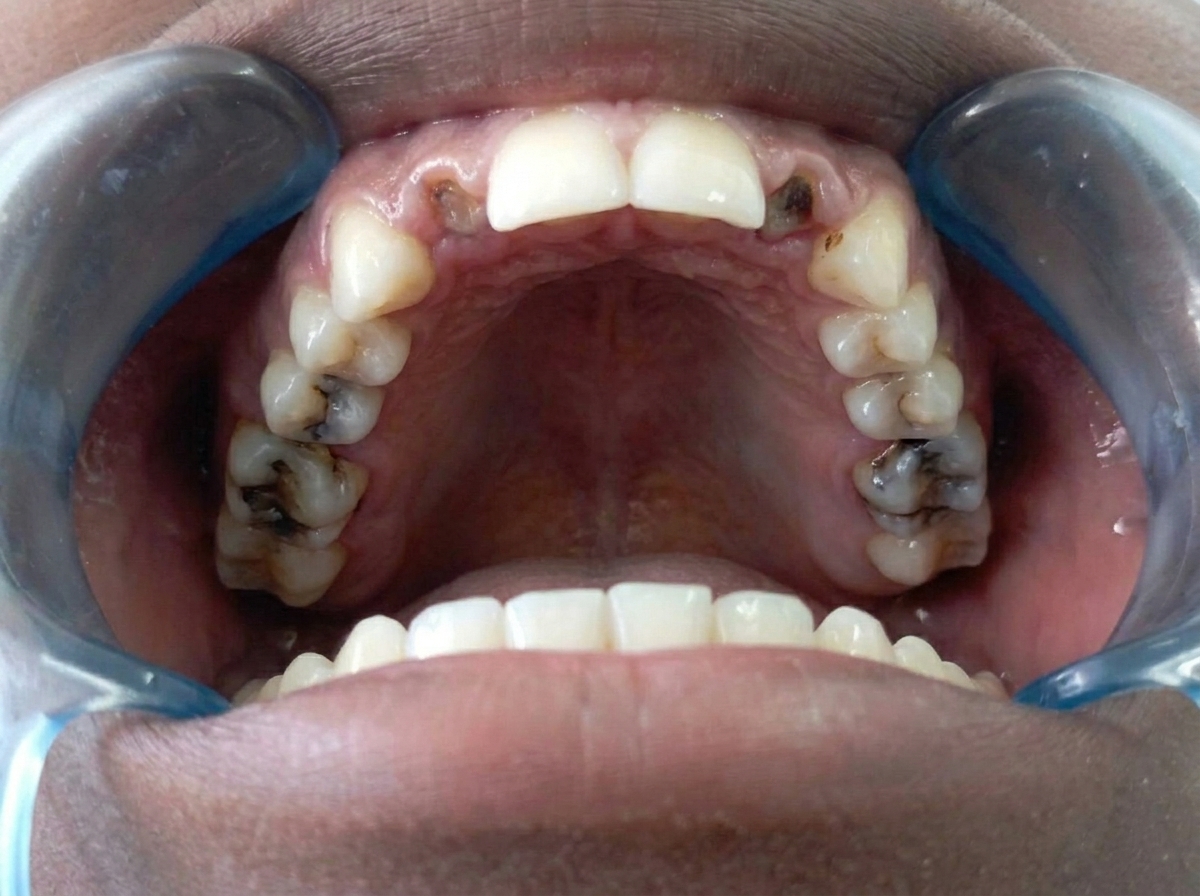
If you need to replace a missing tooth in Kenya, there are three main options: a dental implant, a fixed bridge or a removable denture. Implants replace the tooth and its root without touching the neighbouring teeth, bridges are fixed in place using the teeth on either side of the gap, and dentures are removable and the least invasive to fit. The best choice depends on your gums, jawbone, the health of the nearby teeth and what you want from the result.
This guide compares all three side by side, explains why it is worth acting rather than leaving the gap, and looks at value over the years rather than just on the day.
Why not just leave the gap?
A missing back tooth can feel like a small problem, especially if nobody sees it. But teeth work as a team, and a gap affects the whole mouth over time:
- Neighbouring teeth drift. The teeth beside the gap can tilt or slide into the space, opening new gaps and food traps.
- The opposite tooth moves. With nothing to bite against, the tooth above or below can gradually grow out of its socket.
- Your bite changes. As teeth shift, the way your jaws meet can change, putting extra strain on the remaining teeth.
- The jawbone shrinks. Bone that no longer supports a tooth root slowly reduces, which can make some treatments harder later.
- Chewing and cleaning get harder. People often chew on one side, and tilted teeth are harder to brush and floss.
- Confidence can suffer. A visible gap can make people hide their smile in photos or at events.
None of this happens overnight, which is why it is easy to postpone. The longer the gap is left, though, the more the options can narrow.
Option 1: Dental implants
An implant is a small post placed in the jawbone where the root used to be. Once the bone has healed around it, a crown is attached on top so the new tooth looks and works like a natural one.
- Does not require reshaping the healthy teeth next door
- Helps preserve the jawbone because it replaces the root
- Fixed in place, so there is nothing to remove at night
- Needs enough healthy bone and gums, and treatment takes place over several months to allow healing
- Healing can be affected by smoking and some medical conditions, so a full assessment comes first
Learn more on our dental implants page or in our guide to dental implant costs in Kenya.
Option 2: Fixed bridges
A bridge fills a gap by placing crowns on the teeth on either side and attaching a false tooth between them. It is cemented in place and is not removed.
- Fixed and stable, and feels natural when chewing
- Usually completed in fewer visits than an implant
- The supporting teeth need to be reshaped for the crowns, which is a good option if they already need crowns, and less ideal if they are healthy and untouched
- You need to clean under the false tooth with floss threaders or interdental brushes
Option 3: Partial or complete dentures
A partial denture replaces one or several teeth and clips onto the remaining natural teeth. A complete denture replaces a full arch when all the teeth are missing.
- The least invasive option, with no surgery and no reshaping of healthy teeth
- Can replace several missing teeth at once
- Removed for cleaning and usually at night
- Takes some time to get used to when speaking and eating
- May need relining or adjusting over the years as the gums and bone change shape
Our dentures cost guide explains what affects the price of partial and complete dentures.
Implants vs bridges vs dentures at a glance
| Feature | Dental implant | Fixed bridge | Partial or complete denture |
|---|---|---|---|
| Fixed or removable | Fixed | Fixed | Removable |
| Affects neighbouring teeth | No | Yes, they are reshaped for crowns | Clasps rest on remaining teeth |
| Supports the jawbone | Yes | No | No |
| Surgery needed | Yes, minor surgery | No | No |
| Treatment time | Several months | A few visits | A few visits |
| Upfront cost | Usually the highest | Moderate | Usually the lowest |
| Day-to-day care | Brush and floss like a natural tooth | Clean under the false tooth | Remove and clean daily |
Cost-effectiveness over time
It is natural to compare options by the figure on the first quote, but the cheapest option today is not always the most cost-effective over ten or twenty years. When weighing up value, think about:
- How long it is likely to last. Each option has a different lifespan, and all last longer with good home care and regular check-ups.
- Maintenance. Dentures may need relines or replacement as your mouth changes. Bridges depend on the health of the supporting teeth.
- Impact on other teeth. An option that protects your healthy teeth can save you treatment later.
- Your comfort and confidence. A replacement you are happy to wear every day is better value than one that sits in a drawer.
An accurate quote needs an examination first, because your bone, gums and nearby teeth change what is possible. At your free consultation you get a clear plan and a quote for each suitable option, so you can choose with full information. It is premium care at a fair price, explained honestly.
If you have recently had a tooth removed, ask about replacement options early. Planning ahead can keep more options open.
Frequently asked questions
Which option is best for a single missing tooth?
It depends on the neighbouring teeth and your jawbone. An implant avoids reshaping healthy teeth, while a bridge can make sense if the teeth beside the gap already need crowns. A denture is a less invasive alternative.
Am I too old for a dental implant?
Age alone is not usually the deciding factor. What matters more is your general health, the amount of bone available and the health of your gums.
Can I replace several missing teeth at once?
Yes. Partial dentures can replace several teeth, bridges can span a gap of more than one tooth in some cases, and implants can support multiple teeth. Your dentist will explain which fits your situation.
Does getting a replacement tooth hurt?
Local anaesthetic numbs the area for implant placement and preparing teeth for a bridge, so most patients feel pressure rather than pain. Some tenderness afterwards is normal and usually settles within a few days.