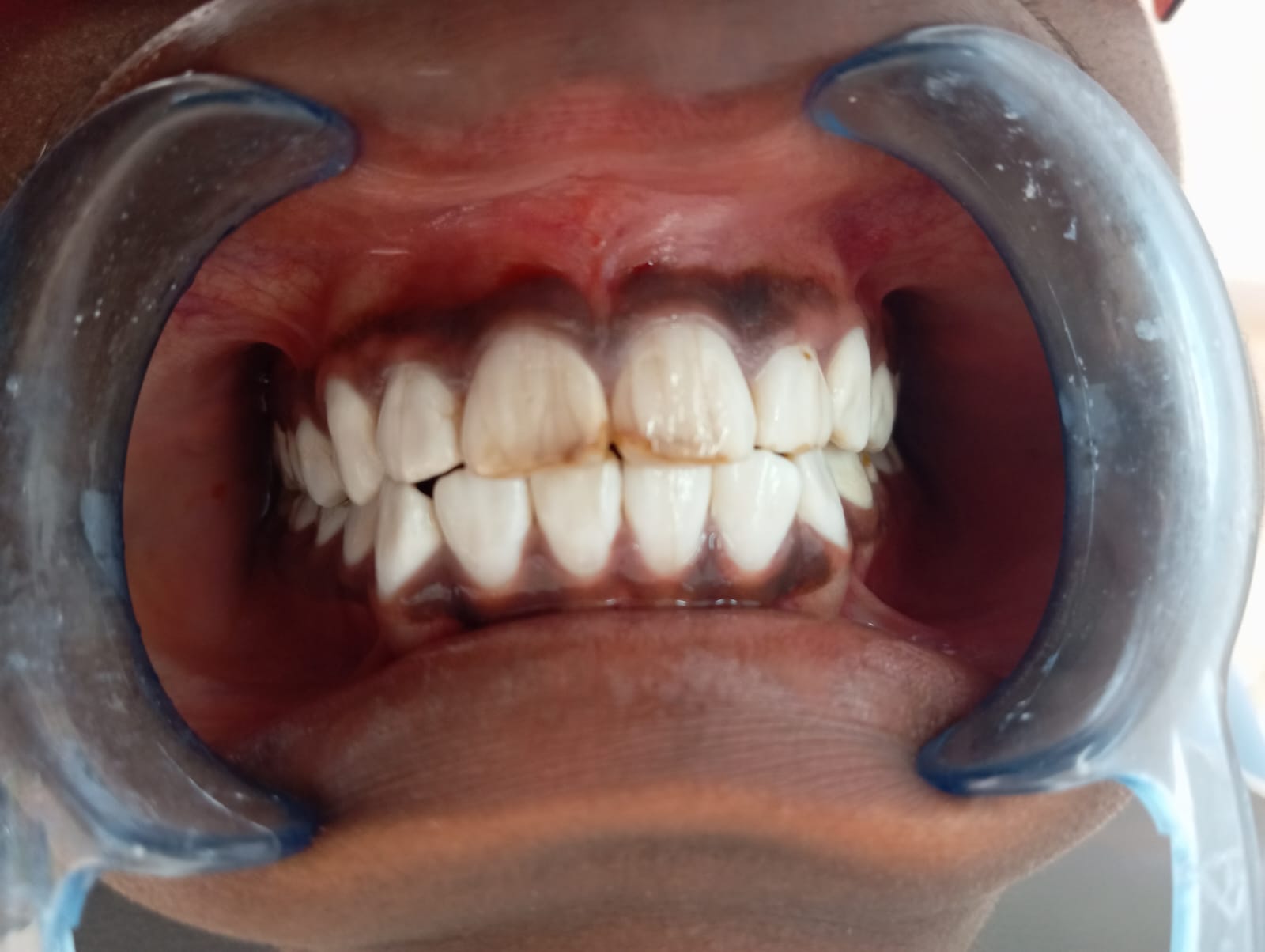
When people compare fixed vs removable braces, the short answer is this: fixed braces can handle almost any tooth movement and work around the clock, while removable appliances suit simpler corrections and depend on you wearing them as instructed. The right choice depends on what your teeth need to do, your age and how well a removable option fits your routine. A dentist can tell you which one suits your mouth after a proper examination.
Below we explain how each type works, who tends to benefit from which, and why the retainer you wear afterwards matters as much as the braces themselves.
How fixed braces work
Fixed braces are small brackets bonded to the front of each tooth, joined by a thin archwire. The wire applies steady, gentle pressure, and it is adjusted at regular appointments so your teeth move gradually into position.
Because they stay on your teeth all the time, fixed braces can do the more demanding work of orthodontics:
- Rotating twisted teeth
- Closing or opening gaps
- Moving whole teeth, roots included, rather than simply tipping them
- Correcting how the upper and lower teeth meet (the bite)
You cannot take them out, which is exactly why they are so reliable. Progress does not depend on remembering to put anything back in.
How removable appliances work
A removable orthodontic appliance is a custom-made plate, usually acrylic with fine wires or springs, that clips onto your teeth. You take it out to eat and to clean it, then put it back in.
Removable appliances are well suited to more limited movements, such as:
- Tipping one or a few teeth into a better position
- Correcting a single tooth that sits behind its neighbours
- Some early corrections in children whose jaws are still growing
- Holding space or guiding teeth as they come through
The trade-off is that they only work while they are in your mouth. If the appliance spends the afternoon in a school bag or a pocket, the teeth are not moving.
Fixed vs removable braces at a glance
| Feature | Fixed braces | Removable appliance |
|---|---|---|
| Worn | All the time, cannot be taken out | Taken out for eating and cleaning |
| Best for | Complex movements, rotations, bite correction | Simpler, limited tooth movements |
| Depends on patient wearing it | No | Yes, very much so |
| Eating | Avoid hard and sticky foods | Remove before meals |
| Cleaning | Takes extra time around brackets and wire | Brush teeth normally, clean the appliance separately |
| Appearance | Brackets visible on the teeth | Plate mostly sits behind the teeth, some wire may show |
| Adjustments | Regular visits to adjust the wire | Regular visits to check and adjust |
Who suits fixed braces?
Fixed braces are often the better fit if:
- Your teeth are noticeably crowded, rotated or spaced
- Your bite needs correcting, not just the position of a few front teeth
- You are a teenager or adult who wants predictable progress without relying on daily habits
- You have tried a removable appliance before and found it hard to wear consistently
Who suits a removable appliance?
A removable appliance can be a sensible, cost-effective option when:
- Only a small correction is needed
- A child is at the right stage of growth for early treatment
- The patient, or a parent, is confident the appliance will be worn for the hours advised
- Being able to take it out for an important event or for cleaning is a priority
Removable appliances are also easy to keep clean, which suits people who find brushing around brackets a chore. For children, see our guide to your child's first dental visit for tips on building good habits early.
Whichever type you choose, the result depends on teamwork. Keep your appointments, follow the cleaning advice and tell us early if something feels loose or sore.
The role of retainers after treatment
Straightening teeth is only half the job. Once braces come off, the fibres around your teeth take time to adapt to their new positions, and teeth naturally tend to drift back towards where they started. A retainer holds them in place while that settles, and for many people it is needed long term.
There are two main types, and we offer both:
Fixed retainers
A thin wire bonded to the back of the front teeth. It is invisible from the front and works without you having to remember anything. It does need careful cleaning, as plaque can build up around the wire, and it should be checked at your regular visits.
Removable retainers
A custom-made retainer you wear as directed, often every night once the initial period is over. It is easy to clean, but it only protects your result if you keep wearing it. Store it in its case, never wrapped in a tissue where it can be thrown away by mistake.
Your dentist may recommend one type, or a combination of both, depending on how much your teeth were moved and how likely they are to relapse.
Cost and value
The cost of orthodontic treatment depends on how complex your case is, how long treatment takes, the type of appliance and the retainers needed afterwards. A cheaper option that does not suit your case can end up costing more if the result does not hold or treatment has to be redone. We explain all of this in our guide to the cost of braces in Nairobi, and you get a clear quote at your free consultation before anything starts. Our aim is premium care at an affordable price, with no surprises along the way.
You can read more about the treatments we offer on our orthodontics page.
Frequently asked questions
Are removable braces as effective as fixed braces?
For the right case, yes. Removable appliances work well for simpler movements when they are worn as advised. For complex crowding, rotations or bite problems, fixed braces are usually more effective.
Can adults get braces?
Yes. Teeth can be moved at any age as long as the gums and supporting bone are healthy. Adults often choose fixed braces for their predictability.
How long will I need to wear a retainer?
It varies from person to person. Many people are advised to wear a retainer long term, at least at night, because teeth can shift throughout life. Your dentist will give you a plan based on your treatment.
Do braces hurt?
Most people feel pressure and tenderness for a few days after fitting and after adjustments, rather than sharp pain. Soft foods and over-the-counter pain relief, taken as directed on the pack, usually help.