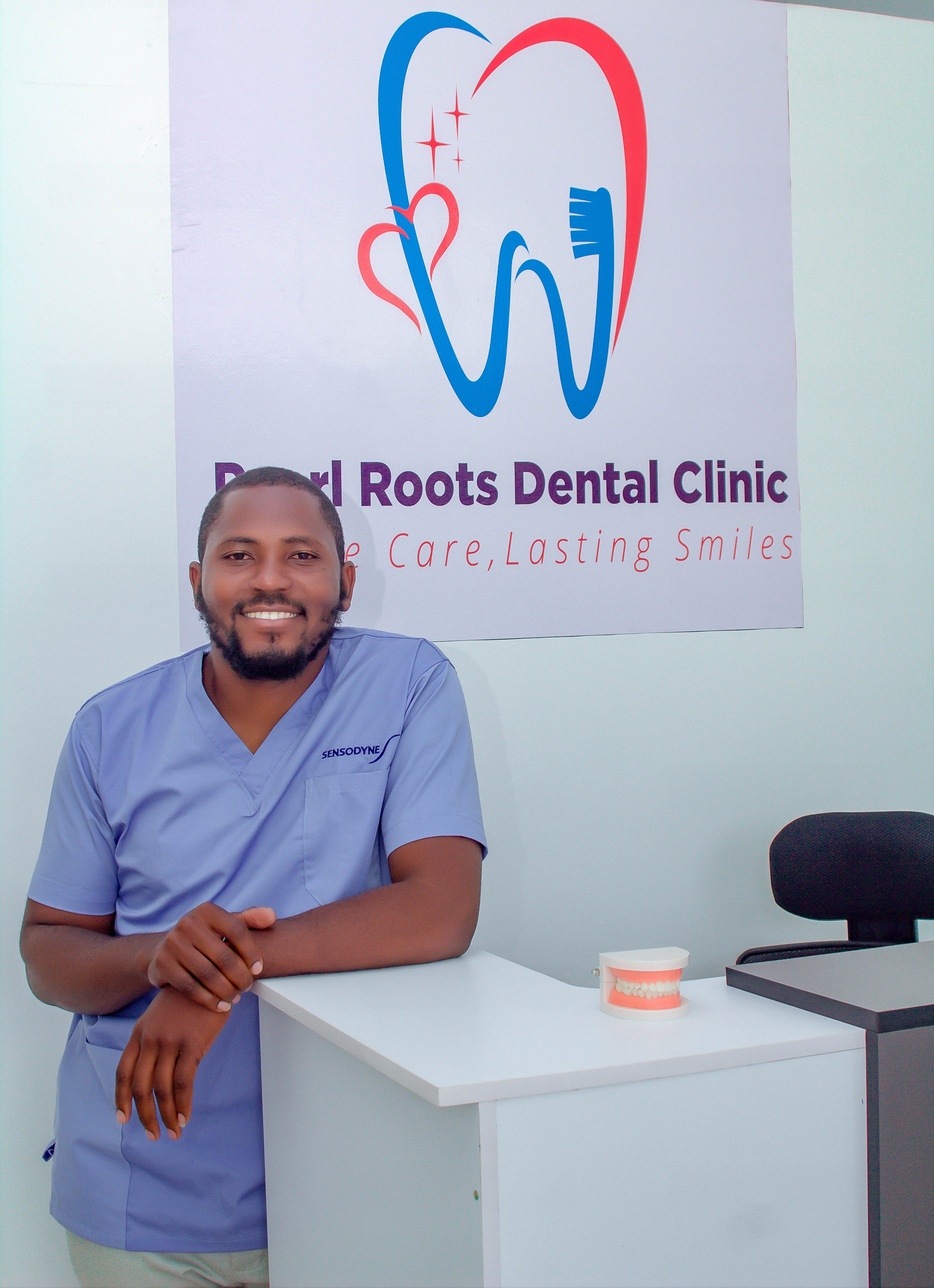
If you are searching for a painless tooth extraction in Ngong, the honest answer is this: with local anaesthetic, most patients feel pressure and movement during an extraction rather than sharp pain. At Pearl Roots Dental Clinic we numb the area thoroughly, explain each step before we do it, and check in with you throughout. Below is what really happens, from the first conversation to the days of healing afterwards, for adults and children alike.
Why a tooth might need to come out
Keeping your natural teeth is always the first goal. An extraction is usually recommended only when a tooth cannot be saved or keeping it would cause more problems. Common reasons include:
- A tooth broken or decayed so badly that a filling or crown can no longer hold it together
- Advanced gum disease that has loosened the tooth
- Crowding, where removing a tooth makes room for orthodontic treatment
- A baby tooth that is not falling out on its own and is blocking the adult tooth underneath
- A wisdom tooth that keeps getting infected or pressing on its neighbours
We will always explain why an extraction is recommended and whether any alternatives exist.
How local anaesthetic keeps you comfortable
Local anaesthetic is why modern extractions feel very different from the stories told over chai:
- A numbing gel first. In many cases we apply a topical gel to the gum so the injection itself is much less noticeable.
- The anaesthetic injection. A small amount of local anaesthetic is placed near the tooth. You may feel a brief pinch or sting for a few seconds.
- Waiting for it to work. Within a few minutes the tooth, gum and often part of your lip or tongue feel heavy and numb.
- Checking before we start. We test the area and only begin once you confirm it feels numb. If you feel anything sharp at any point, tell us and we can give more anaesthetic.
What you will still notice is pressure. The tooth sits in a socket held by ligaments, and gently loosening it involves firm pushing. Pressure is normal and expected; pain is not, and you should always let us know if something hurts.
Agree on a signal before we begin, such as raising your left hand. It gives you control, and we will pause straight away whenever you use it.
The extraction, step by step
Before the day
Tell us about your medical history, medicines (especially blood thinners) and allergies. Eat a normal meal beforehand unless advised otherwise, as you will be numb for a few hours afterwards.
During the appointment
- We confirm the plan with you and answer any last questions.
- The area is numbed as described above.
- Using gentle, controlled movements, the tooth is loosened in its socket and then lifted out.
- A piece of gauze is placed over the socket and you bite down to help a blood clot form.
A straightforward extraction is often quicker than people expect; some wisdom teeth take longer, and we will tell you in advance.
Extractions for children
Children's baby teeth usually have shorter roots and often come out more easily. We use simple, friendly words, show them the tools in a non-scary way, and let a parent stay close. If your child is nervous, our children's dentistry approach focuses on building trust so the visit does not shape a lifelong fear.
Aftercare: protecting the blood clot
The most important part of healing is the blood clot that forms in the empty socket. It protects the bone and nerves underneath while new tissue grows. If it is dislodged too early, a painful condition called dry socket can develop. To protect it:
For the first 24 hours
- Keep biting gently on the gauze for the time we advise, then replace it if oozing continues.
- Do not rinse, spit forcefully or poke the area with your tongue or fingers.
- Avoid straws. The sucking action can pull the clot out.
- Avoid smoking and vaping, which slow healing and raise the risk of dry socket.
- Skip alcohol and very hot drinks; let that cup of chai cool down first.
Over the next few days
- After the first day, rinse gently with warm salty water after meals.
- Brush your other teeth as normal, being careful around the socket.
- Use pain relief as advised by your dentist or pharmacist.
What to eat
Stick to soft, lukewarm foods for the first few days and chew on the other side:
| Good choices | Best avoided for now |
|---|---|
| Mashed potatoes, ugali softened with stew | Hard foods like nuts or roasted maize |
| Yoghurt, porridge (uji), soft rice | Crunchy or chewy snacks |
| Scrambled eggs, soups that have cooled | Very hot, spicy or acidic foods |
| Bananas, avocado, blended fruit | Anything sucked through a straw |
Some mild soreness, swelling and slight oozing in the first day or two is a normal part of healing.
Warning signs: when to call us
Phone or WhatsApp us on +254 748 704 333 during our hours (Monday to Friday, 8am to 6pm) if you notice:
- Pain that gets worse after the second or third day instead of better
- A bad taste or smell from the socket, or a socket that looks empty
- Bleeding that keeps returning despite firm pressure on gauze
- Swelling that is increasing after a few days
- Numbness that has not worn off by the next day
Seek urgent hospital care straight away if you have swelling spreading to your face, eye or neck, trouble breathing or swallowing, heavy bleeding that will not stop, or a high fever. These need immediate medical attention, especially outside our opening hours. Our dental emergency guide explains more.
Planning what comes next
A gap can let neighbouring teeth drift, so once you have healed we can discuss implants, bridges or dentures; see our guide to options for replacing a missing tooth. We aim to offer premium dental care at an affordable price, and you will know your options and costs before any treatment begins. Read more on our tooth extraction page.
Frequently asked questions
Will a tooth extraction hurt?
Local anaesthetic numbs the area, so most patients feel pressure rather than pain during the procedure. Some soreness afterwards is normal and usually eases over a few days with the pain relief your dentist recommends.
How long does it take to recover?
Most people feel much better within a few days, though the socket takes a few weeks to heal fully.
Can my child have a tooth taken out at your clinic?
Yes. We provide extractions for both adults and children, with a gentle, patient approach for younger patients. A parent can stay with the child throughout.